

Description
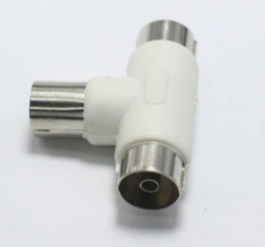
Product Description The TV Antenna Jack T-Connector (commonly known as a 2-Way Coaxial T-Splitter or Belling-Lee Tee adapter) is a compact, passive RF splitter designed to divide a single television antenna or cable feed into two separate outputs. Constructed with a flame-retardant white PVC or ABS plastic body enclosing a solid metal shielding block, this T-shaped adapter allows users to run two televisions or receivers simultaneously from a single wall outlet without needing complex wiring or tools. Featuring a simple push-on friction design, it typically sports one male PAL/IEC plug input and two female PAL/IEC jack outputs (or vice versa, depending on the configuration). It is engineered to maintain a standard 75 Ω impedance across both paths to minimize signal loss, reflection, and high-frequency ghosting. Key Specifications Interface Type: 9.5mm PAL / IEC Coaxial (Belling-Lee Standard) Configuration: Commonly 1x Male Input to 2x Female Outputs (T-Shape) Impedance: 75 Ω (Optimized for over-the-air broadcast and cable TV signals) Frequency Range: Typically supports standard VHF / UHF broadcast bands (5 MHz−1000 MHz). Compatibility & Applications As an industry-standardized analog video component, this TV antenna T-splitter is entirely universal and non-proprietary. It plugs directly into standard television setups, RF distribution boards, and coaxial fly-leads regardless of the brand. It is highly utilized for localized signal sharing in the following applications: 1. Dual TV Home Setups Multi-Room Viewing: Connects to a standard living room antenna wall socket to split the signal, allowing one cable to run to the main lounge TV and another to an adjacent kitchen or bedroom television. Dual Receiver Boxes: Feeds a single antenna line into both a television’s built-in tuner and a standalone set-top box or digital video recorder (DVR) simultaneously. 2. Radio & FM Integration TV and Radio Splitting: Splitting a unified rooftop antenna signal down to feed a television tuner line alongside a dedicated FM/AM radio receiver or high-fidelity stereo amplifier. 3. Media Testing & DIY Labs Signal Monitoring: Used by repair technicians or hardware hobbyists to mirror a live antenna feed into a test oscilloscope or Software Defined Radio (SDR) dongle while keeping a display monitor active.
Reviews
There are no reviews yet.